

Table of Contents
1. Cometly

Cometly is an AI-powered marketing attribution platform designed to help businesses understand exactly which campaigns, ads, and channels drive real revenue. It connects data from ad platforms, websites, and CRM systems to track the full customer journey from the first click to final conversion using server-side tracking for improved accuracy in a privacy-first environment. The platform not only shows where conversions come from but also feeds enriched data back into ad platforms to improve campaign optimization. With features like multi-touch attribution models, real-time analytics, and AI-driven recommendations, Cometly enables marketing teams to move beyond basic reporting and make data-backed decisions that improve performance and return on ad spend.
Core Features:
- Attribution & Tracking
- AI & Optimization
- Integrations & Data Sync
- Analytics & Reporting
- Profit & Revenue Attribution
- Advanced Data Capabilities
Advantages:
- Highly accurate attribution (server-side tracking)
- AI-driven optimization recommendations
- Tracks full customer journey
- Helps reduce wasted ad spend
- Provides profit-based insights (not just revenue)
- Improves decision-making with real-time data
- Integrates attribution with ad platform optimization
Disadvantages:
- Pricing is not transparent (requires demo/custom quote)
- Can be expensive for small teams (perceived high cost)
- Implementation may take time (~1 month)
- Advanced features may require higher-tier plans
- Best suited for paid media-heavy businesses (not ideal for low ad spend)
Best For:
- Performance marketers & agencies
- E-commerce brands
- Businesses running multi-channel paid ads
- Teams needing accurate ROI tracking
2. Ruler Analytics
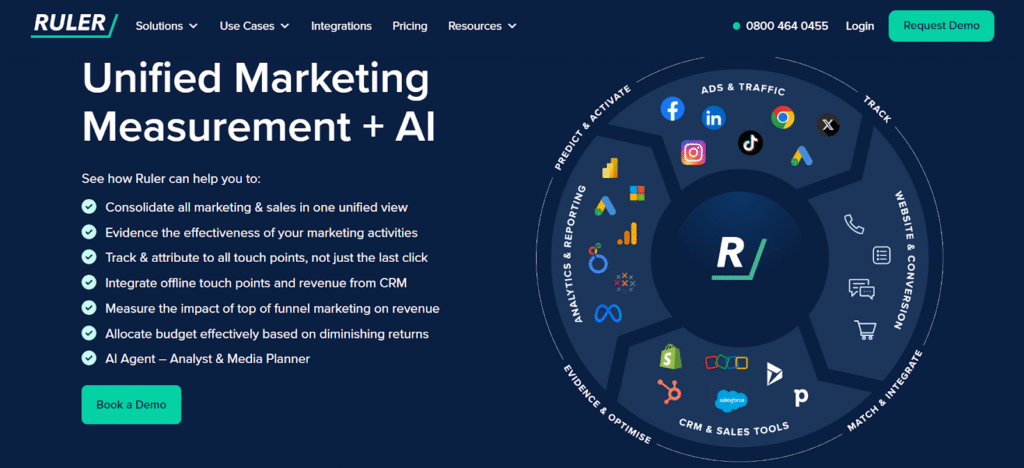
Ruler Analytics is a powerful marketing attribution software designed to help B2B companies accurately track and measure the impact of their marketing efforts across both online and offline channels. Unlike many attribution tools that focus only on digital interactions, Ruler Analytics goes a step further by connecting website activity with offline conversions such as phone calls, form submissions, and sales outcomes.What makes Ruler Analytics stand out is its ability to link anonymous visitor journeys to real revenue by integrating seamlessly with CRM systems. This allows businesses to see exactly which campaigns, keywords, and channels are driving leads and ultimately generating revenue. By providing detailed insights into the full customer journey, Ruler enables marketers to make smarter decisions and optimize their strategies for better ROI.
Core Features:
- Multi-Touch Attribution
- Call Tracking & Offline Attribution
- Closed-Loop Reporting
- Visitor-Level Tracking
- CRM & Marketing Integrations
- Keyword-Level Attribution
Advantages:
- Tracks Online + Offline Conversions
- Clear Revenue Attribution
- Improves ROI Visibility
- Detailed Customer Journey Insights
- Strong CRM Integration
Disadvantages:
- Complex Initial Setup
- Learning Curve
- Limited Advanced AI Features
- Pricing Can Be High
- UI Can Feel Outdated
Best For:
- B2B companies with offline conversions (calls, sales teams)
- Businesses needing full-funnel revenue attribution
- Marketing teams focused on ROI and lead quality tracking
- Organizations using CRM-driven sales processes
3. Revsure
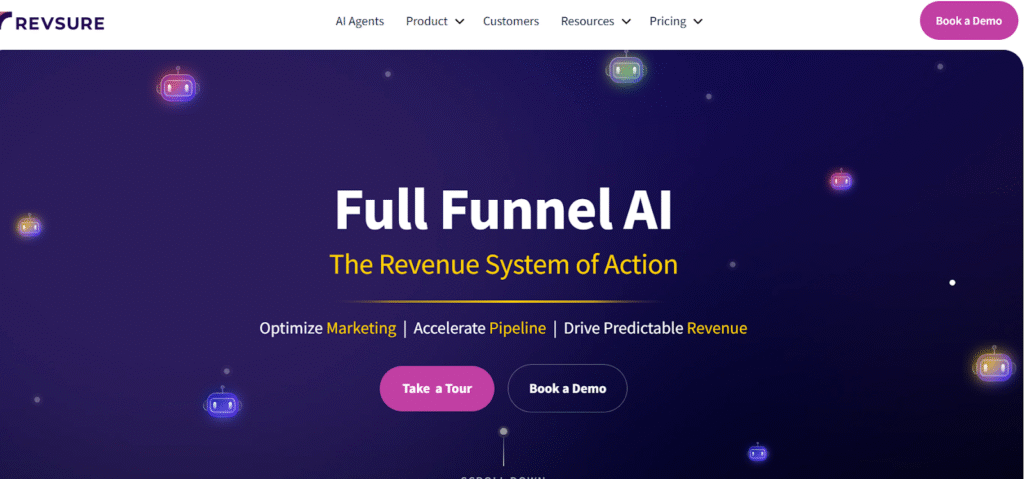
RevSure is a Revenue System of Action built for complex B2B GTM motions. It unifies fragmented marketing, sales, and GTM Ops data into a full-funnel context data platform, enabling teams to connect signals across the entire customer journey and tie them directly to pipeline and revenue outcomes.
Powered by Agentic AI and an MCP server for real-time contextual intelligence, RevSure goes beyond traditional attribution by delivering automated next-best actions across the funnel. This helps teams eliminate execution gaps, accelerate pipeline, and improve forecast accuracy. By combining data, workflows, and AI into a single system, RevSure enables more predictable revenue, with customers seeing up to 50% higher pipeline ROI and a 20% lift in conversion rates.
Core Features:
- Full-funnel context layer connecting GTM data into a unified source of truth
- Advanced multi-touch attribution tied to pipeline and revenue outcomes
- Agentic AI for surfacing insights and recommending next-best actions
- MCP server enabling context-aware, explainable AI decisions
- AI-driven revenue forecasting and pipeline visibility
- Integrations across CRM, marketing automation, and sales tools
- Real-time dashboards for funnel, campaign, and revenue performance
- Prioritization of high-impact accounts, channels, and campaigns
Advantages:
- Provides complete visibility into the B2B revenue journey
- Aligns marketing, sales, and finance on shared revenue metrics
- Bridges the gap between insights and execution with AI
- Improves ROI tracking with context-driven attribution
- Focuses teams on pipeline and revenue, not just activity
- Reduces manual reporting with automated insights
Consideration:
- Requires clean and well-structured GTM data
- Setup may be complex depending on integration needs
- Teams may need to adapt to revenue-centric measurement
- Advanced capabilities may require RevOps or data expertise
Best For:
- Revenue Operations (RevOps) teams
- B2B marketing and demand generation teams
- Companies with complex, multi-touch sales cycles
- Organizations using multiple GTM tools
- CMOs and CROs focused on pipeline and revenue growth
4. Dreamdata
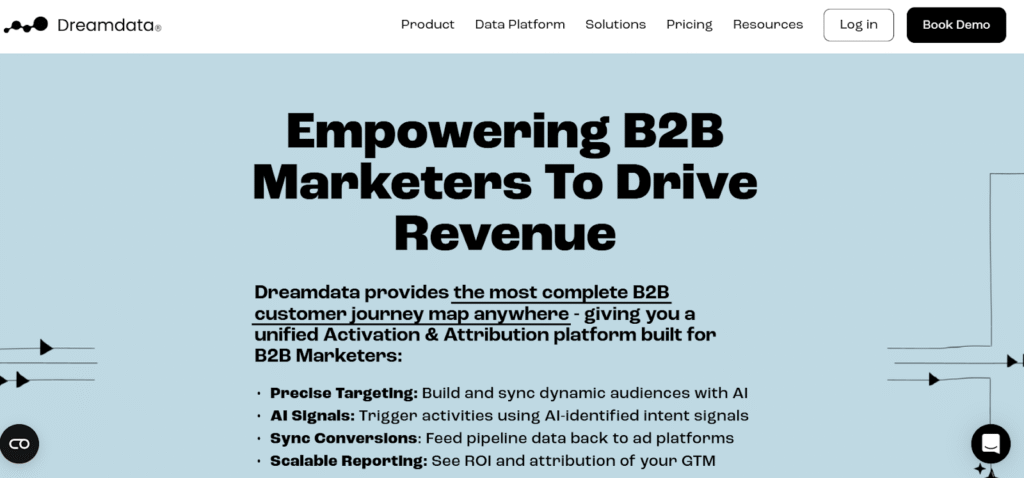
Dreamdata is a leading marketing attribution software built specifically for B2B companies that want to connect their marketing efforts directly to revenue. Unlike traditional analytics tools that focus only on leads or clicks, Dreamdata provides a complete view of the entire customer journey by combining data from multiple sources such as CRM systems, advertising platforms, website interactions, and sales activities.
Core Features:
- Multi-Touch Attribution
- Customer Journey Mapping
- Data Integration & Unification
- Revenue Attribution
- Automated Data Cleaning
- Account-Based Analytics
- Audience Syncing
Advantages:
- Built for B2B
- Full-Funnel Visibility
- Strong Data Integration
- Accurate Attribution Models
- Improves ROI Decisions
Disadvantages:
- Steep Learning Curve
- Time-Consuming Setup
- Higher Pricing
- Data Dependency
- Limited Product Analytics
Best For:
- B2B SaaS companies with long sales cycles
- Marketing teams focused on revenue attribution
- Businesses using CRM + multiple marketing channels
- Data-driven organizations needing deep funnel insight
5. Fibbler
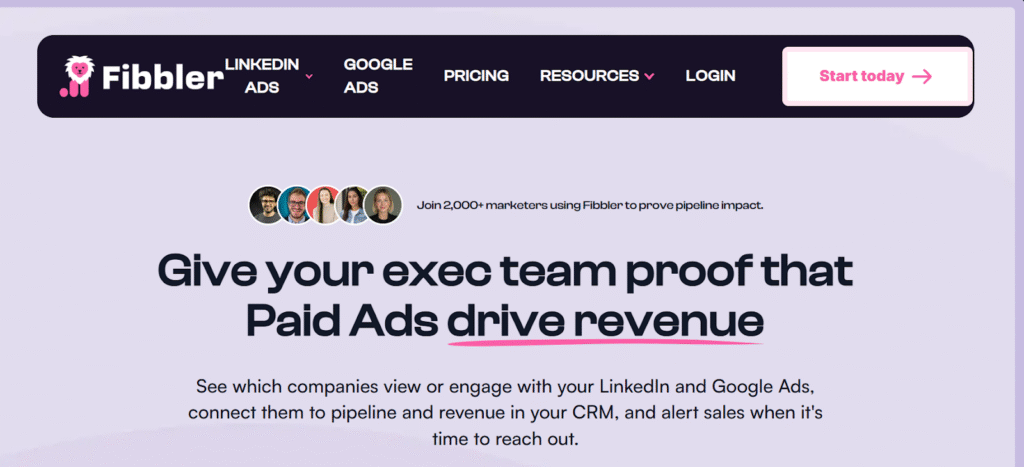
Fibbler is an emerging marketing attribution software designed to help B2B companies gain clear visibility into their marketing performance and revenue impact. It focuses on simplifying complex attribution processes by bringing together data from multiple channels-such as ads, website interactions, and CRM systems-into one unified dashboard.
What makes Fibbler unique is its emphasis on actionable insights and ease of use. Instead of overwhelming users with overly complex data models, it provides straightforward attribution reporting that helps marketers quickly understand which campaigns and channels are driving results. This makes it especially useful for teams that want reliable insights without a steep learning curve.
Core Features:
- Multi-Touch Attribution
- Unified Marketing Dashboard
- Campaign Performance Tracking
- Customer Journey Insights
- Data Integration
- Simple & Intuitive UI
Advantages:
- User-Friendly Interface
- Quick Setup
- Clear Actionable Insights
- Affordable Option
- Good for Growing Teams
Disadvantages:
- Limited Advanced Features
- Basic Attribution Models
- Fewer Integrations
- Scalability Limitations
- Less Customization
Best For:
- Small to mid-sized B2B businesses
- Startups looking for simple marketing attribution software
- Teams needing easy-to-understand insights
- Companies with limited budget and technical resources
6. Hubspot
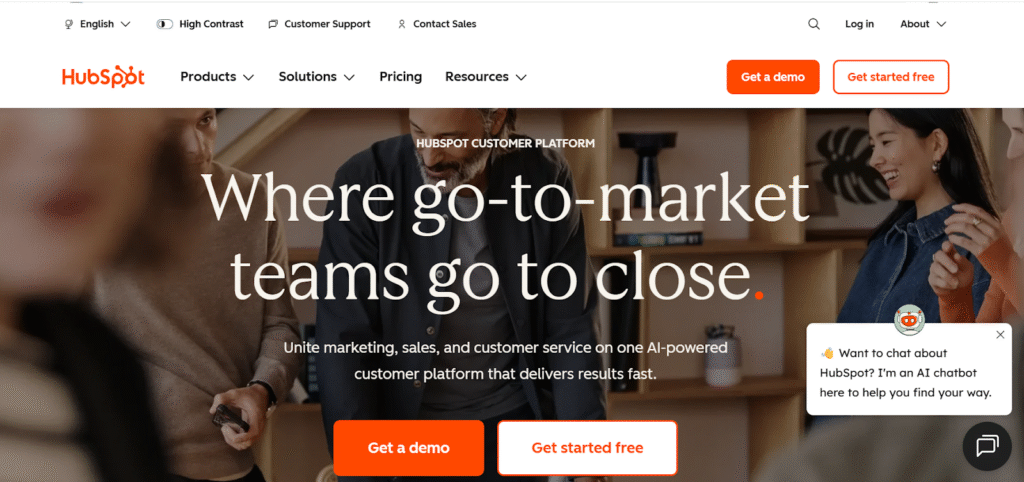
HubSpot is a widely used marketing attribution software that comes built into its all-in-one CRM and marketing automation platform. It is especially popular among B2B companies for its ability to combine marketing, sales, and customer data in one place, making attribution more accessible and easier to understand.
What makes HubSpot stand out is its native attribution reporting, which allows businesses to track how different marketing channels, campaigns, and touchpoints contribute to leads, conversions, and revenue. From first-touch to multi-touch attribution models, HubSpot provides clear insights into the entire customer journey without the need for complex integrations.
Core Features:
- Multi-Touch Attribution Reporting
- Built-in CRM Integration
- Campaign Tracking
- Lifecycle Stage Tracking
- Custom Reporting Dashboards
Advantages:
- All-in-One Platform
- User-Friendly Interface
- Strong Integration Ecosystem
- Reliable Attribution Insights
- Scalable Solution
Disadvantages:
- Expensive at Scale
- Limited Advanced Attribution
- Customization Limits
- Data Complexity in Large Accounts
- Dependency on HubSpot Ecosystem
Best For:
- B2B companies looking for an all-in-one marketing attribution software + CRM
- Small to mid-sized businesses needing easy setup and usability
- Teams focused on inbound marketing and lead generation
- Organizations wanting marketing and sales alignment in one platform
7. AppsFlyer
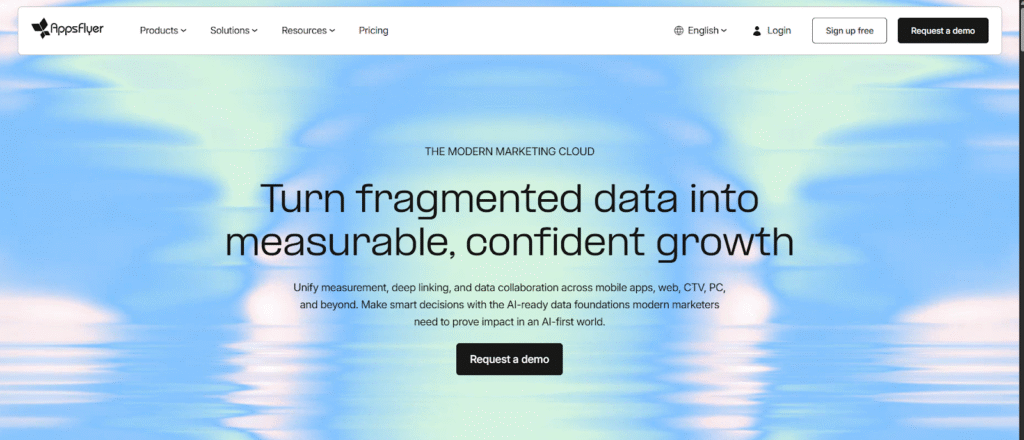
AppsFlyer is a leading marketing attribution software known for its advanced capabilities in mobile and cross-platform measurement. It helps businesses track, analyze, and optimize user acquisition across multiple channels, including mobile apps, web, CTV, and even offline touchpoints.
What makes AppsFlyer stand out is its robust measurement suite, which includes mobile attribution, cross-platform tracking, ROI measurement, and incrementality analysis. It also offers powerful features like deep linking, web-to-app tracking, and fraud protection, enabling marketers to understand the complete user journey from first interaction to conversion.
Core Features:
- Mobile & Cross-Platform Attribution
- Deep Linking Suite
- Fraud Protection
- ROI & Performance Measurement
- Incrementality Testing
- Real-Time Analytics
- Privacy-Focused Measurement
- Extensive Integrations
Advantages:
- Highly Accurate Attribution
- Strong Fraud Prevention
- Scalable Platform
- Privacy-Compliant.
- Powerful Deep Linking
Disadvantages:
- Complex Interface
- Not Fully B2B-Focused
- Higher Pricing
- Setup Complexity
- Limited Web-Only Attribution Depth
Best For:
- B2B companies with mobile apps or cross-device journeys
- Businesses running mobile-first marketing campaigns
- Enterprises needing fraud protection and advanced attribution
- Marketing teams focused on app installs, engagement, and ROAS optimization
8. Mixpanel
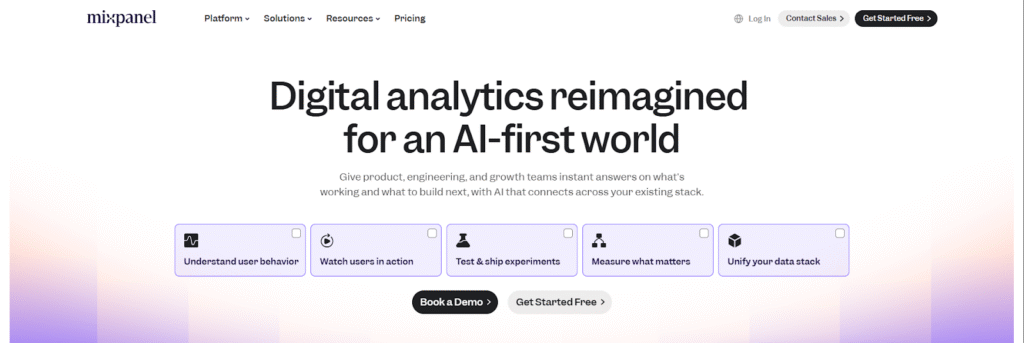
Mixpanel is a powerful marketing attribution software and product analytics platform that helps B2B companies understand how users interact with their products and marketing channels. Unlike traditional attribution tools that focus mainly on campaign tracking, Mixpanel goes deeper by analyzing user behavior, engagement, and retention across the entire customer journey.
Core Features:
- Event-Based Tracking
- Funnel Analysis
- Cohort Analysis
- User Journey Tracking
- Retention Analysis
- Real-Time Analytics
- A/B Testing & Experimentation
- Integrations
Advantages:
- Deep User Behavior Insights
- Highly Flexible Analytics
- Real-Time Data
- Strong Visualization
- Great for Product-Led Growth
Disadvantages:
- Not Pure Attribution Tool
- Learning Curve
- Complex Setup
- Limited Marketing Attribution Depth
Best For:
- B2B SaaS companies focused on product analytics and user behavior
- Teams using product-led growth (PLG) strategies
- Businesses wanting deep funnel and retention insights
- Companies combining marketing + product data analysis
9. Singular
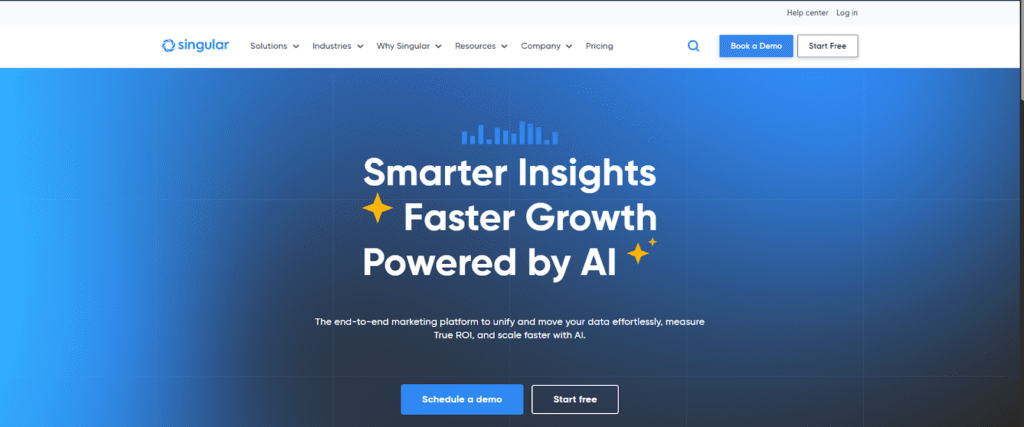
Singular is an advanced marketing attribution software designed to help B2B companies unify their marketing data and gain clear, actionable insights across all channels. It brings together attribution, analytics, and cost aggregation into a single platform, enabling businesses to measure performance and optimize campaigns with precision.
What sets Singular apart is its ability to combine marketing attribution with data integration and reporting, allowing teams to track the entire customer journey-from initial engagement to conversion-across multiple platforms. It supports cross-channel attribution, helping marketers understand how different touchpoints contribute to growth.
Core Features:
- Cross-Channel Attribution
- Marketing Analytics Dashboard
- ROI & Performance Measurement
- Data Integration
- Fraud Detection
- Creative Performance Insights
- AI-Driven Insights
Advantages:
- Unified Data View
- Strong Cross-Platform Tracking
- Accurate Cost & ROI Tracking
- Scalable for Enterprise
Disadvantages:
- Complex Setup
- Learning Curve
- Primarily Mobile-Focused
- Higher Pricing
- Customization Limits
Best For:
- B2B companies with multi-channel marketing strategies
- Businesses needing unified cost + attribution reporting
- Enterprises managing large-scale ad campaigns
- Teams focused on data-driven growth and ROI optimization
10. HockeyStack
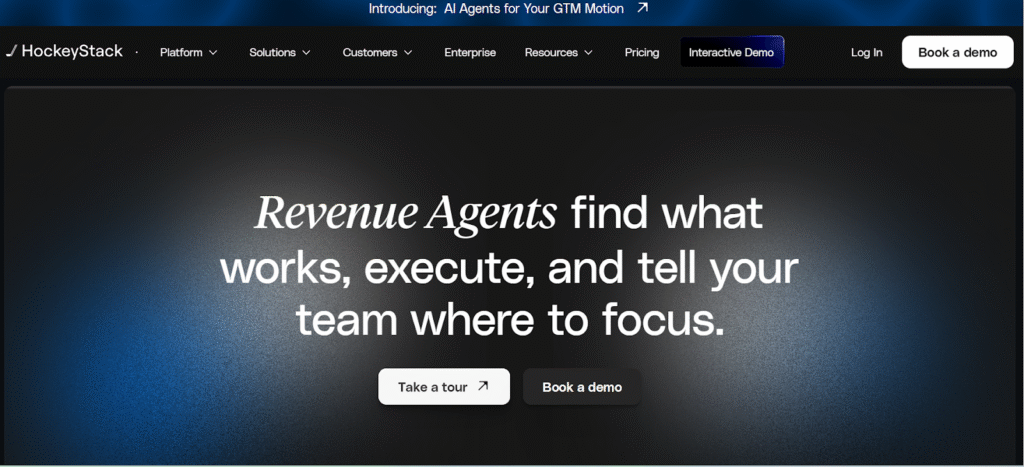
HockeyStack is a modern marketing attribution software designed specifically for B2B companies that need deeper visibility into their entire customer journey. Unlike traditional tools that rely heavily on last-click attribution, HockeyStack connects data across multiple touchpoints—including website activity, CRM, ad platforms, and product usage—to provide a unified and accurate view of how leads convert into revenue. Its strength lies in combining marketing attribution with product analytics, making it especially valuable for SaaS businesses with longer and more complex sales cycles. With features like multi-touch attribution, funnel analysis, and real-time reporting, HockeyStack helps marketing and revenue teams identify high-performing channels, optimize campaigns, and make data-driven decisions that directly impact pipeline and ROI.
Core Features:
- Multi-Touch Attribution Models
- Full-Funnel & Revenue Attribution
- Product + Marketing Analytics
- Account-Level & Buyer Journey Tracking
- No-Code Dashboard Builder
- Strong Integrations
Advantages:
- Unified Data Across Teams
- Deep B2B Attribution Insights
- Flexible Attribution Modeling
- No-Code & Faster Setup
- Real-Time Decision Making
- Advanced Funnel & Journey Visualization
Disadvantages:
- Steep Learning Curve
- Higher Cost for Small Teams
- Complex for Simple Use Cases
- Limited Reporting Depth (in some cases)
- Requires Ongoing Management
Best For:
- B2B SaaS companies with long and complex sales cycles
- Mid-market to enterprise businesses handling multi-channel marketing
- Revenue, marketing, and RevOps teams needing full-funnel visibility
- Account-Based Marketing (ABM) teams tracking multiple stakeholders
- Data-driven organizations focused on pipeline, ROI, and attribution accuracy
FAQs
Is marketing attribution software only useful for large companies?
No. While large enterprises often use advanced attribution platforms, many tools also offer solutions designed for startups and mid-sized B2B companies. The right platform depends on your marketing complexity, number of channels, and data maturity.
How does marketing attribution software work for B2B companies?
It collects data from multiple channels like ads, email, and CRM systems, then uses attribution models (often AI-driven) to map the full buyer journey and measure each touchpoint’s impact.
What is the best attribution model for B2B marketing?
Multi-touch attribution models are most effective for B2B, as they distribute credit across multiple interactions instead of focusing only on first or last touch.
Why is full-funnel attribution important in B2B marketing?
B2B sales cycles are longer and involve multiple decision-makers, so full-funnel attribution helps track performance from awareness to conversion, improving ROI and strategy.
What features should I look for in marketing attribution software?
Look for AI-driven insights, multi-channel tracking, CRM integrations, customizable attribution models, and real-time reporting to ensure accurate and actionable data.
Conclusion
Choosing the right marketing attribution software is critical for B2B companies aiming to understand performance across complex buyer journeys. From AI-powered full-funnel platforms to advanced multi-touch attribution tools, each solution offers unique strengths in tracking, analytics, and integration. The best choice depends on your business size, tech stack, and data maturity. By leveraging the right platform, you can gain accurate insights, improve campaign efficiency, and align marketing with revenue goals. As competition grows, investing in a reliable attribution solution helps you make smarter decisions and drive sustainable, data-backed growth across all marketing channels.

Other Articles

Top SEO Agencies for Cleaning Services in USA




No Comment! Be the first one.